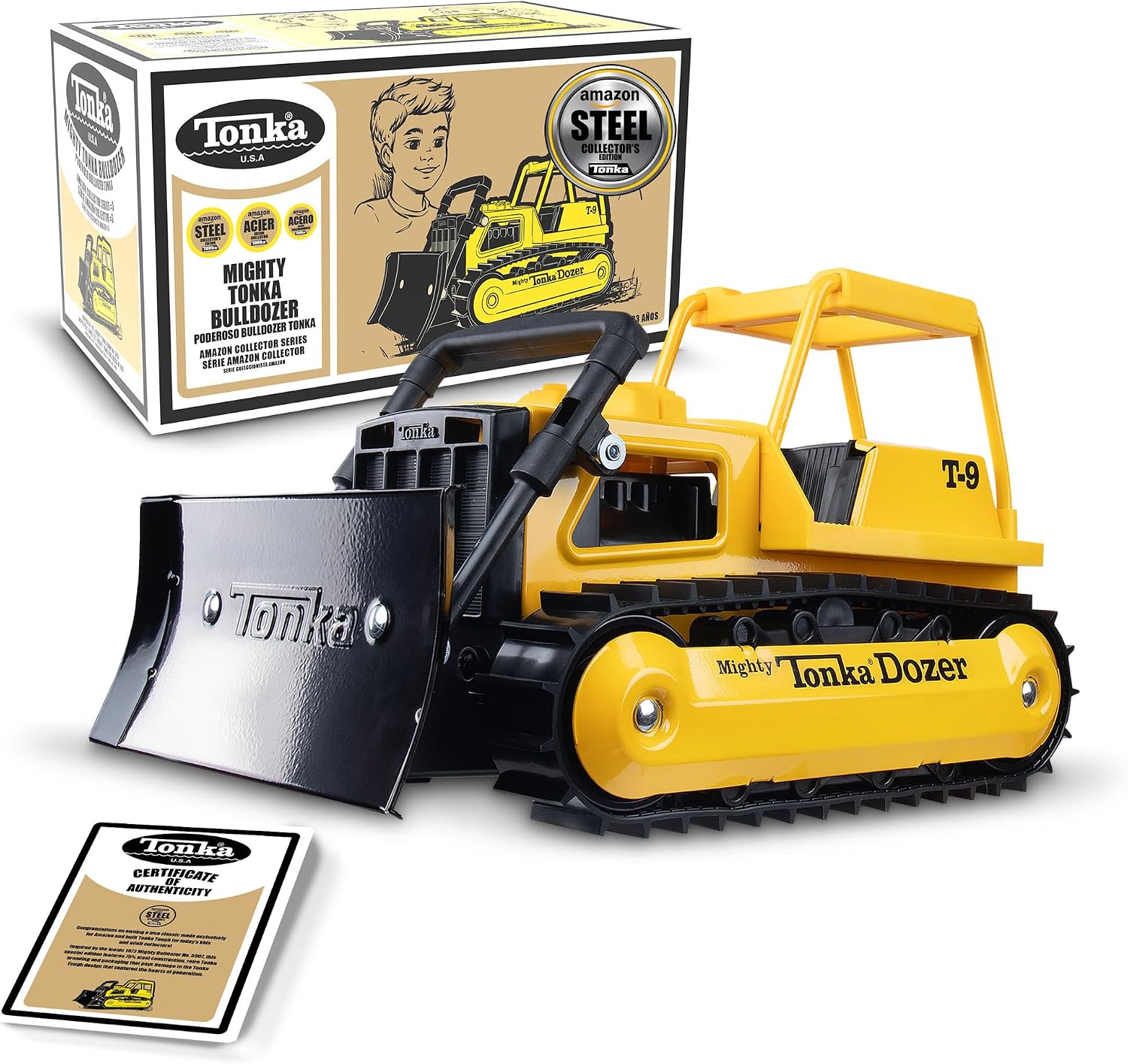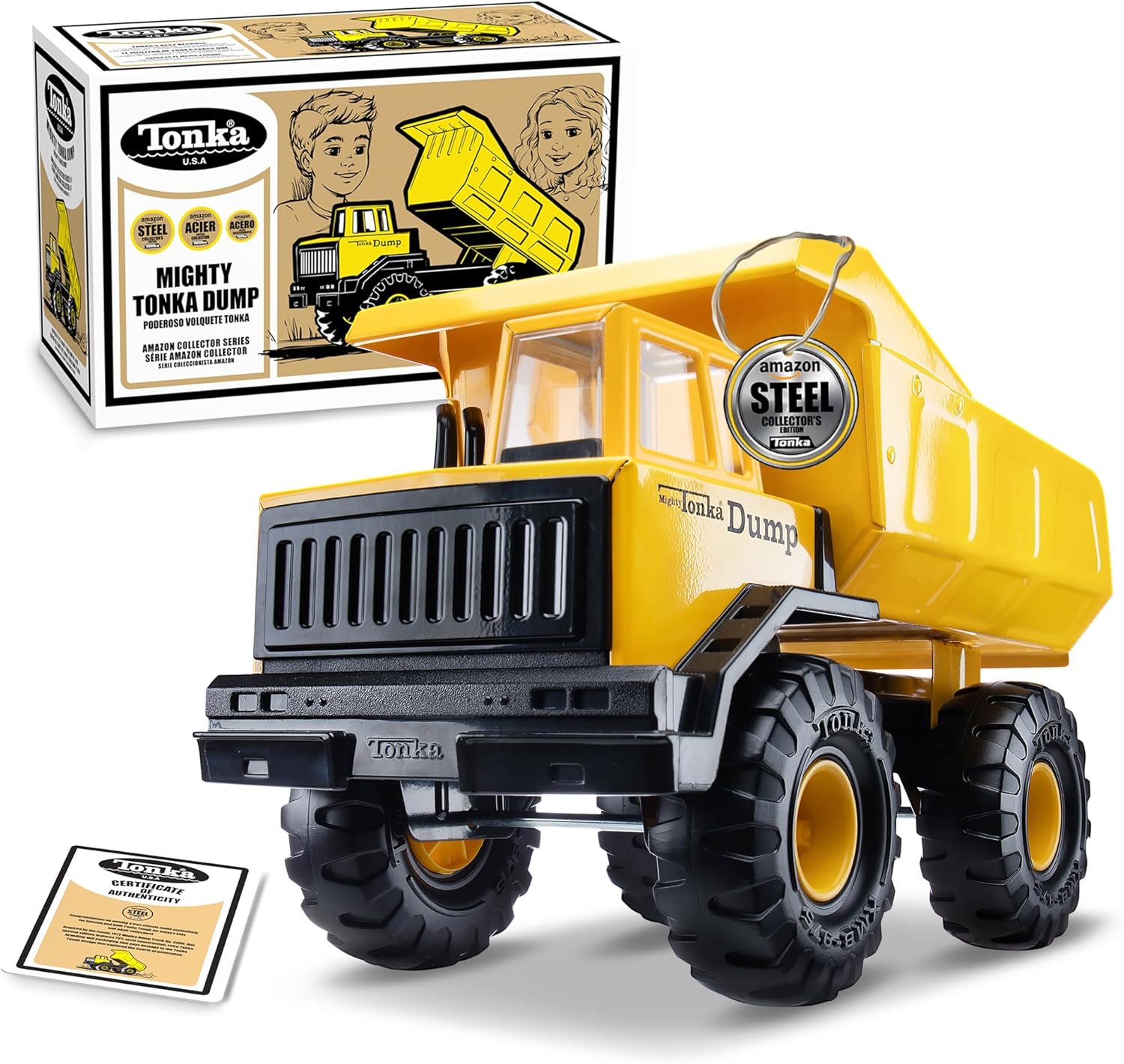
Vintage identification
Mentioned in this article
How to identify an old steel truck
A practical guide to checking the metal, wheels, decals, and stamps on older toy trucks.
Start with the steel gauge
Pick the truck up by the cab and feel the weight in your hands. The oldest toys feel surprisingly heavy because the factory formed them from thick, heavy-gauge sheet steel with bare folded edges. You will notice that the early cabs, beds, and chassis parts contain no plastic pieces at all. Even the small dashboard fittings and headlamp housings on early production runs were pressed metal.
Later production runs introduced plastic components step by step across different model years. First came clear windshield inserts, followed by molded plastic grilles, interior bench seats, and tailgates. If your attic find has a steel bed but a flexible plastic cab front, it belongs to a later era than an all-metal model. Our current Retro Collectors Edition recreates that early feel by using twice the steel of standard builds.
Look at the underside stamp
Turn the truck upside down and look closely at the bare floor of the chassis. The factory stamped or embossed the brand mark straight into the metal on most production runs. The shape of this mark changed across the decades. Early versions often show an oval perimeter with wave details, while later periods shifted to rounded rectangles or simple bold lettering pressed flat against the undercarriage plate.
Wipe away dry garden dirt or cobwebs with a soft cloth to expose the lettering. Some pressings include a specific casting or part number right below the brand name. To pinpoint the exact model variation, you usually need to match that stamped number against established collector reference lists. Keep in mind that heavy play can blur these raised letters, so check with a torch held at a flat angle across the metal.
Original factory paint with honest scratches usually holds far more interest for collectors than a fresh coat applied at home.
Check the wheels and tyres
The wheels tell their own quiet story about when the truck rolled out of the workshop. Very old trucks carry thick rubber tyres mounted on two-piece metal hubs that spin on heavy steel rod axles. The tyre sidewalls on these early pieces often carry deep treads and raised lettering. As manufacturing methods shifted over time, hard plastic one-piece wheel assemblies began replacing the heavy two-piece rubber sets.
Look at how the wheels sit on their axles today. Steel rod axles hold up well against heavy backyard hauling, but bent pins can make the truck track sideways across the floor. Spin each wheel by hand to check for flat spots or brittle rubber. Tyres left on damp concrete basements often dry out, crack, or split along the inner rim, while hard plastic wheels survive damp storage with less visible decay.
Decals and door graphics
Examine the paper stickers or water-slide transfers applied to the doors and dump box sides. The earliest trucks used thin water-slide decals that dried flat and often developed tiny spiderweb cracks across the coloured ink over time. Later releases switched to thicker vinyl stickers with rounded corners and glossy protective coatings. Oval door stickers with clean text points point to older production runs than rectangular foil stickers.
Notice how the factory applied the lettering. Faded ink and missing corners are common on toys that spent summers in the sandpit. Even heavily worn original transfers give clear clues about the original colour scheme and purpose of the work vehicle. When checking door graphics, avoid rubbing dry paper transfers with wet sponges, as older water-applied graphics can peel away completely when soaked.
Judging honest paint condition
A vintage truck does not need to look showroom fresh to be worthwhile. Scratches, minor paint chips along the bed edges, and small dings are ordinary working history for any toy built for sandbox play. Deep rust that eats holes straight through the steel panels is the real problem to watch for. Light surface rust can be stabilized, but rusted-through fenders weaken the core frame of the toy.
Resist the urge to strip the metal and spray on a fresh coat of hardware enamel. Original factory paint with minor scuffs almost always holds more interest for enthusiasts than a homemade repaint. Repainting hides the original factory gloss and buries small details like stamped cab lines under thick paint. Wipe the dust away with a dry brush and let the honest marks remain visible.