Brand history
Mentioned in this article
How cold steel became the sandbox truck
The story of garden tools, cold rolled steel and a name borrowed from Lake Minnetonka.
Garden tools in a schoolhouse
Mound Metalcraft started business in 1946 in Mound, Minnesota. The original plan was to build tie racks and metal garden tools for local homeowners. Those rakes and hoes worked fine, but they sat on shelves while nearby toy buyers kept asking for something heavier for backyards. The small crew had sheet metal presses sitting idle between tool runs and decided to try stamping heavy steel for children instead.
The shift happened fast. In 1947 the workshop stamped out its first two toy designs, the Steam Shovel No. 100 and the Crane and Clam No. 150. Both used thick steel parts held together with sturdy rivets. Those two toys outsold the garden tools almost immediately. Parents wanted toys that did not crack on gravel driveways, and the builders realized their future was in the dirt.
A name from the lake
The company changed its official name to Tonka Toys in 1955. The word came directly from the Dakota Sioux word tanka, which translates to great or big. That choice was tied closely to nearby Lake Minnetonka, where the company founders lived and worked. It sounded solid, heavy and blunt, which matched the stamped metal vehicles rolling out of the paint shop each morning.
The name stuck because the toys lived up to the word. By the mid-1950s the catalogue had expanded into delivery vans, road graders and fire engines, all finished with thick enamel paint. Kids could stand on the beds without collapsing the sides. The little Minnesota town had become known across the country for building the toughest haulers in the toy box, built entirely around cold rolled metal.
Heavy sheet metal survives wet sand and rough knees because it bends under weight rather than snapping.
The arrival of the Mighty Dump
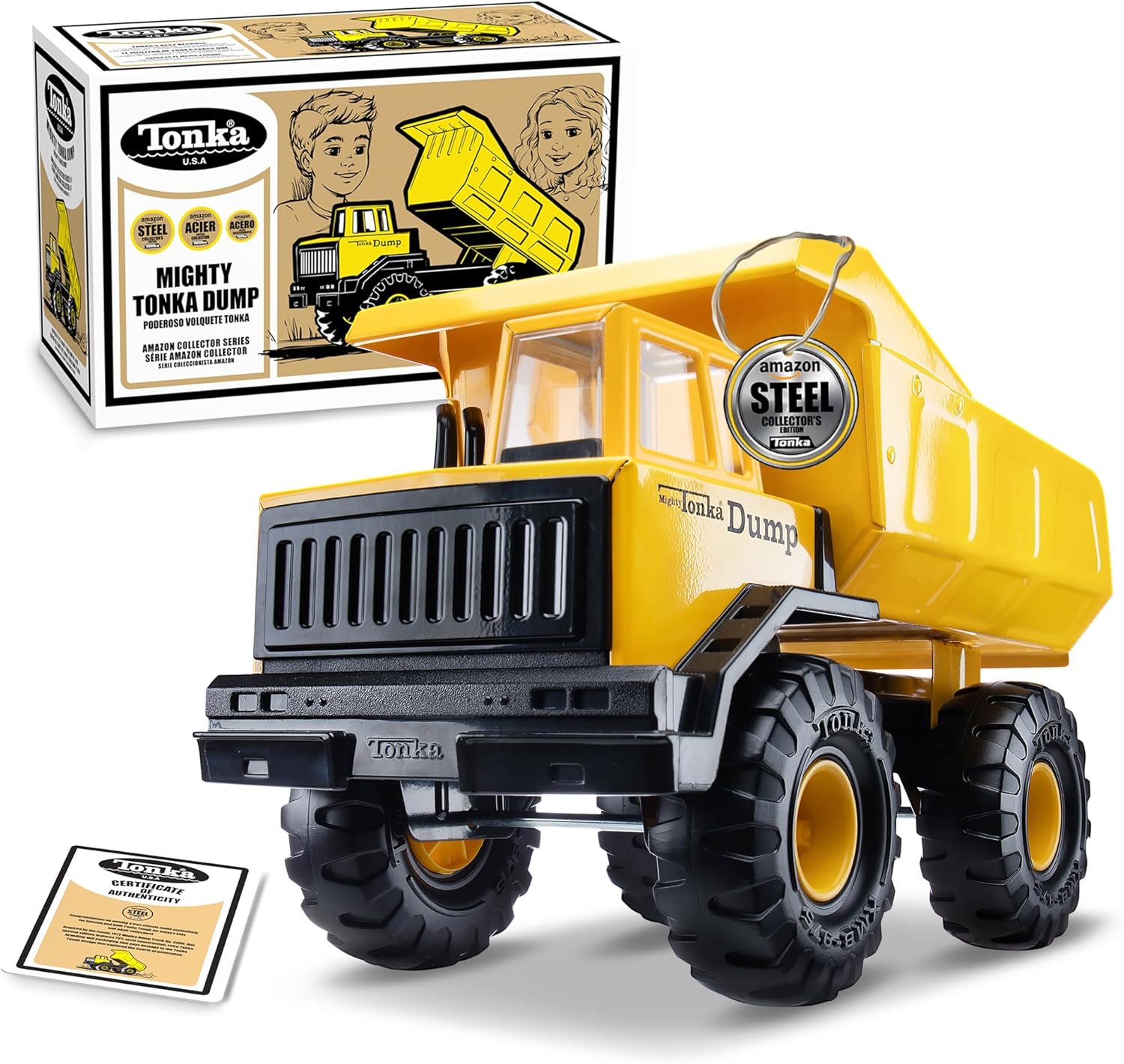
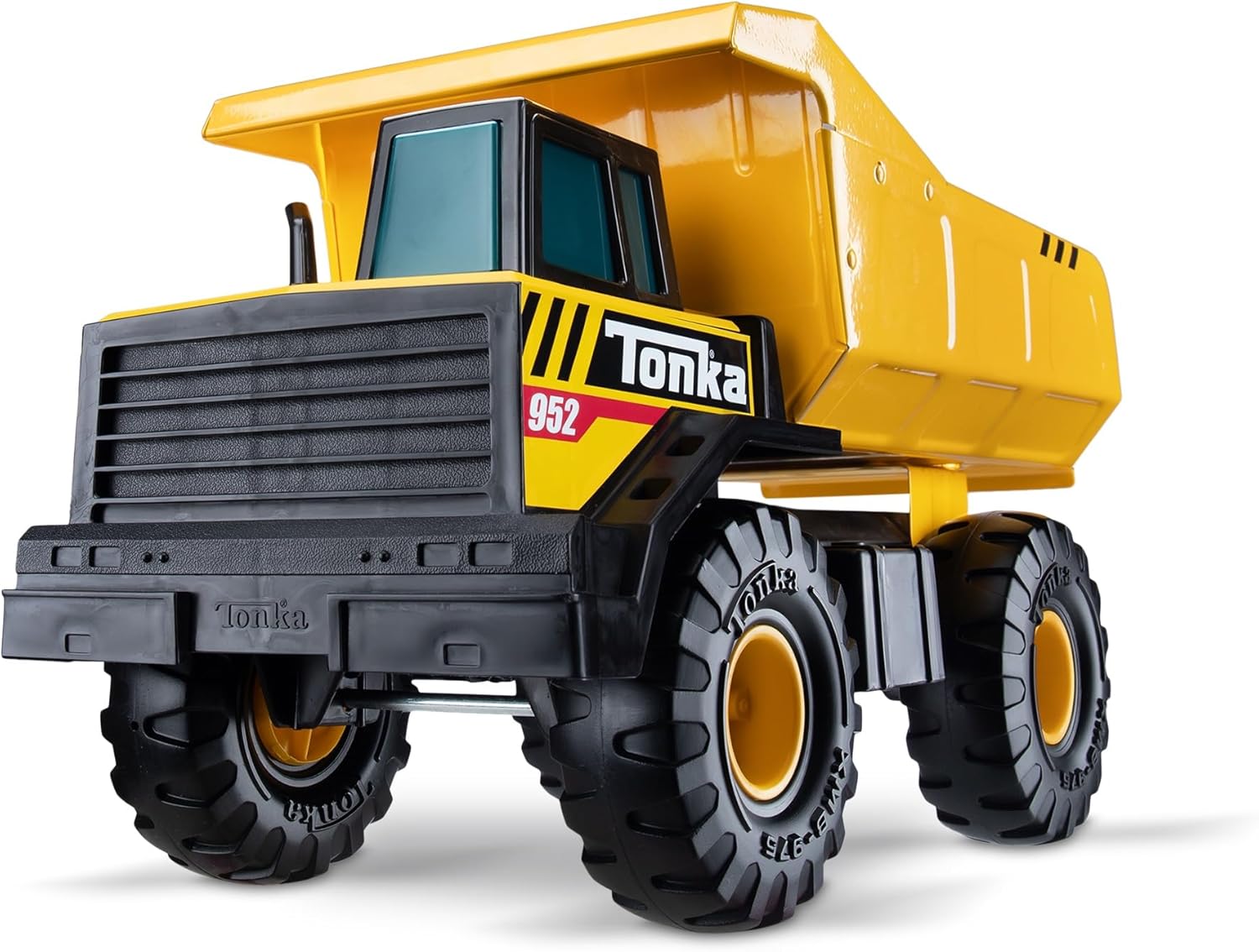
The Mighty Dump Truck arrived in 1964 and took over the sandbox world. It was larger and heavier than earlier haulers, built around a deep steel bed and massive ridged tyres that rolled over gravel mounds. Kids loaded it with wet earth, crushed stone and backyard bricks. The hand lever tipped full loads out the back gate with a loud clatter that defined afternoon play.
That truck became the flagship model for the entire brand. It set the pattern for our current Steel Classics line, which keeps the thick yellow bed and steel cab intact for children aged three and older. The proportions stayed squat and wide so the vehicle would not tip sideways when fully loaded on an uneven lawn. Generations of children learned how to dig trenches behind that yellow cab.
New owners and steady metal
Corporate changes followed as the toy industry shifted in the late twentieth century. Hasbro acquired the brand in 1991, keeping the focus on heavy construction vehicles while expanding the range. Today the trucks are built by Basic Fun under license, maintaining the original steel construction for our main lines. The materials still come from the same tradition of stamped sheet metal and durable axles.
Our catalogue now divides the vehicles into clear groups. We carry the Steel Classics for traditional dirt play, alongside the Retro Collectors Edition, which uses twice the steel and mid-century styling. For smaller spaces we have the compact Giga Series two-packs, and for younger builders aged two and up, our Next Generation line offers the plastic Interactive Talking Truck alongside the Next Gen Mighty Dump.
Built for wet grass and mud
Children do not treat toys gently, and steel remains the sensible choice for backyard earthmoving. Plastic can crack when a child drops it onto a concrete step on a cold morning. A steel cab takes the impact, keeps its shape and weathers the rain. You can leave one of these haulers out overnight by the sandbox and pick up digging right where you stopped yesterday.
Scratched paint and small dings are normal after a summer in the garden. They give each hauler its character as the years pass. Wipe the axles dry after a wash in the garden hose, keep the hinge pins clear of grit, and the truck will roll on until the next birthday.